
Juggling a soccer ball with your feet is a vital skill mastered by top players like Lionel Messi, Cristiano Ronaldo, and Kylian Mbappé. This technique enhances your ball control, coordination, and agility—crucial skills for any serious soccer player. With regular practice, spending 15-20 minutes daily, you’ll see improvement within a few weeks.
Important Safety Note: Always practice in a safe, open space—preferably outdoors, away from windows, roads, and tripping hazards.
Why Juggling Matters in Soccer
Juggling isn’t just a flashy trick—it’s essential for mastering ball control, coordination, and balance. Regular juggling practice helps players become more versatile, improving their ability to manage the ball during matches and impress teammates with their skill.
Getting Started: Basic Juggling Techniques
Step-by-Step Guide:
- Start Simple: Drop the soccer ball onto your dominant foot, then kick it back up with your ankle locked and toe pointed upward. Focus on making light contact to control the ball’s bounce.
- Practice Both Feet: Alternate between your dominant and weaker foot to ensure balanced skill development. Roll the ball across your foot and use your hands to hold it as you practice the starting position.
- Maintain Proper Positioning: Keep your knees bent, stay on your toes, and keep your shoulders loose. This helps with quick adjustments and maintaining balance. Your mind should stay focused, and your body ready to adjust. Use your head to direct the ball when juggling with your forehead, and use your shin and thigh to keep the ball in the air.
- Incorporate Backspin: Create backspin by hitting the ball with a scooping motion using the top of your foot (laces). This helps keep the ball close to your body, making it easier to catch and control.
- Use Different Body Parts: Practice using your thighs, shoulders, and head to keep the ball in the air. Juggling with your shoulders can be particularly challenging but adds an extra level of control and impresses onlookers. This variety of techniques helps players improve control and prepares them for different game situations.
Watch this guide for a visual demonstration of these techniques.
Tracking Your Progress
Tracking your progress is crucial for motivation and improvement. Start by noting how many contacts you can achieve in one go. Each week, challenge yourself to beat your previous record. This helps you see your improvement and keeps your mind focused on your goals.
Progressing to Advanced Techniques
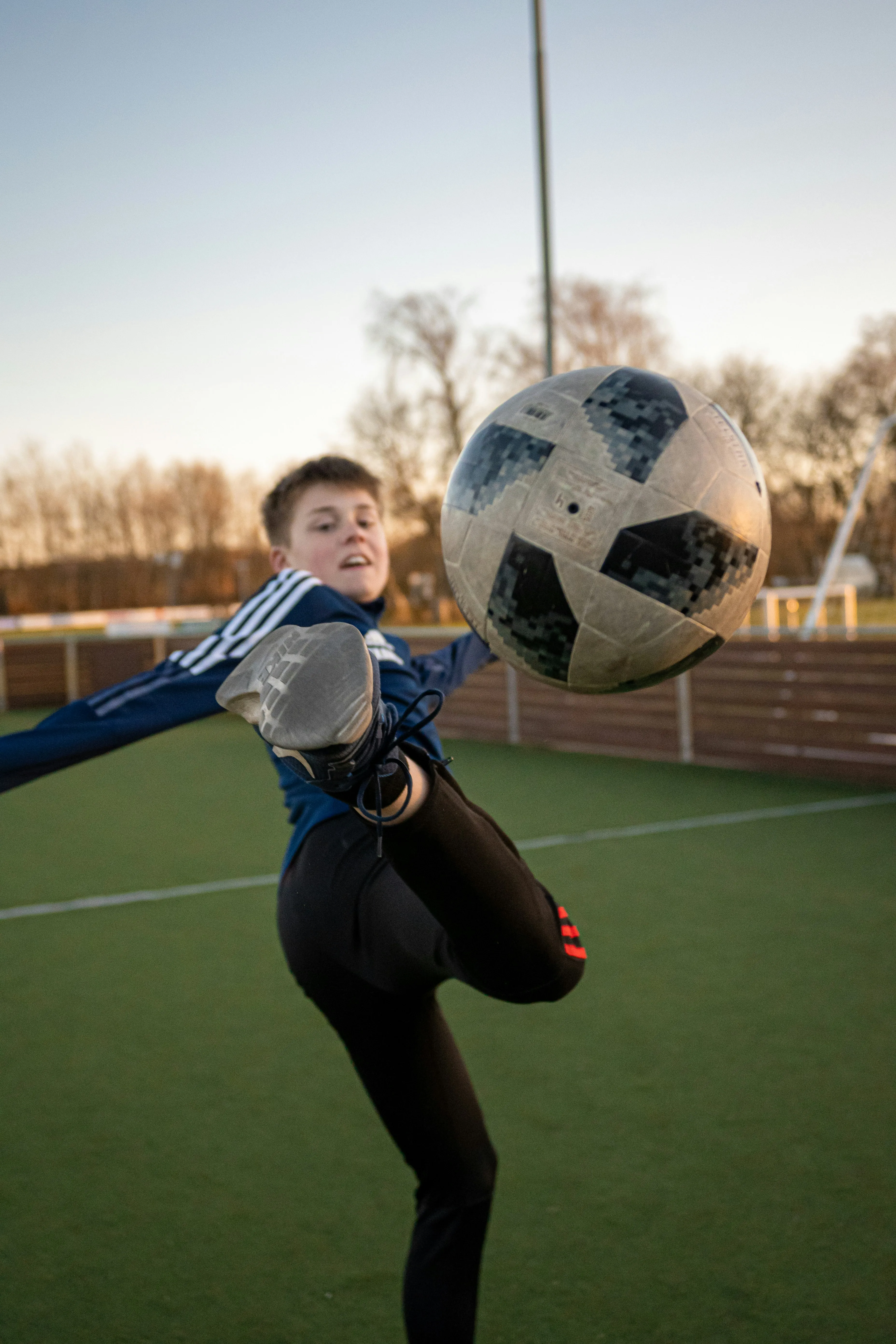
As you improve, incorporate complex movements:
- Use Different Body Parts: Juggle with your thighs, shoulders, and shins. Each body part requires a slightly different technique, helping players master ball control.
- Juggling with Spin: Add spin to the ball when you kick it. This makes juggling more difficult and refines your touch.
Overcoming Common Challenges
Here’s how to tackle common difficulties:
- Balance Issues: Keep your neck and shoulders loose, stay on your toes, and be ready to adjust.
- Inconsistent Bounces: Ensure your ankle is locked and that you’re making contact with the ball using the correct part of your foot. Focus on practicing on an even surface. If necessary, let the ball bounce once before you hit it again, helping you maintain control and rhythm.
- Difficulty with the Weaker Foot: Start by holding the ball and practicing controlled kicks with your weaker foot. Gradually increase the number of touches as you gain confidence.
- Frustration: It’s natural to find juggling difficult at first. Keep a positive mindset and view each mistake as a step toward improvement.
Incorporating Juggling into Training
To maximize your practice:
- Daily Routine: Set aside 15-20 minutes each day for focused juggling practice.
- Specialized Balls: Using a slightly deflated ball or a specialized juggling ball can make the learning process easier.
- Practice with Friends: Juggling with friends can add a fun, competitive element to your practice. You can throw in games like soccer tennis to keep things interesting. Players can also practice letting the ball bounce once before hitting it again, helping to build consistency.
Conclusion: Mastery Through Persistence

Mastering soccer ball juggling requires patience and dedication. By tracking your progress and practicing regularly, you’ll see improvements in your juggling skills and overall soccer game. With time, you’ll be able to impress your teammates and friends with your newfound abilities. Players who dedicate themselves to this skill will see benefits that extend well beyond juggling, enhancing their overall gameplay and confidence on the field.
Frequently Asked Questions (FAQs)
What does juggling the ball do?
It improves your control, balance, and overall ball-handling skills, essential for soccer players.
What is the quote about ball juggling?
A common quote is, “Imagine life is a game in which you are juggling five balls. The balls are called work, family, health, friends, and integrity. And you’re keeping all of them in the air.” But let’s start with one ball here.
What Does the Expression ‘Juggling’ Mean?
In soccer, juggling refers to the skill of keeping the ball in the air using various body parts without letting it touch the ground. This requires precision, balance, and control. Beyond sports, the term is often used as an analogy for managing multiple tasks or responsibilities simultaneously, much like how a juggler keeps several balls in motion. It highlights the challenge of balancing various aspects of a busy life, where dropping the ball in one area can cause a ripple effect in others.